What exactly are cannabinoids?
We speak of a cannabinoid when it concerns a chemical compound that can bind to the cannabinoid receptors in the brain and the rest of the body. The name is derived from cannabis, because these compounds were first discovered in the cannabis plant. Cannabinoids do not only occur in cannabis, though. There are also cannabinoids of the body’s own (endocannabinoids), which occur in every mammal. On top of that, cannabinoids can be made synthetically in the lab, often for scientific applications.
Contrary to what is often thought, cannabinoid is not the collective name for all the compounds in cannabis. Cannabis contains around 300 different chemical compounds on average. Of those, 80 to 100 fall under the heading of cannabinoid. Compounds such as terpenes and flavonoids are therefore not cannabinoids.
Cannabinoids and the endocannabinoid system
The body’s own cannabinoids and the cannabinoid receptors together form the endocannabinoid system (ECS). Like all mammals, every human has such a system, which interacts with cannabinoids from CBD oil, for instance. The ECS is involved in regulating a wide range of processes, such as memory, digestion, body temperature, the experience of pain and mood, and works closely with the nervous system in doing so. What taking CBD means within that exactly is still very much the subject of research.
Which cannabinoids are there?
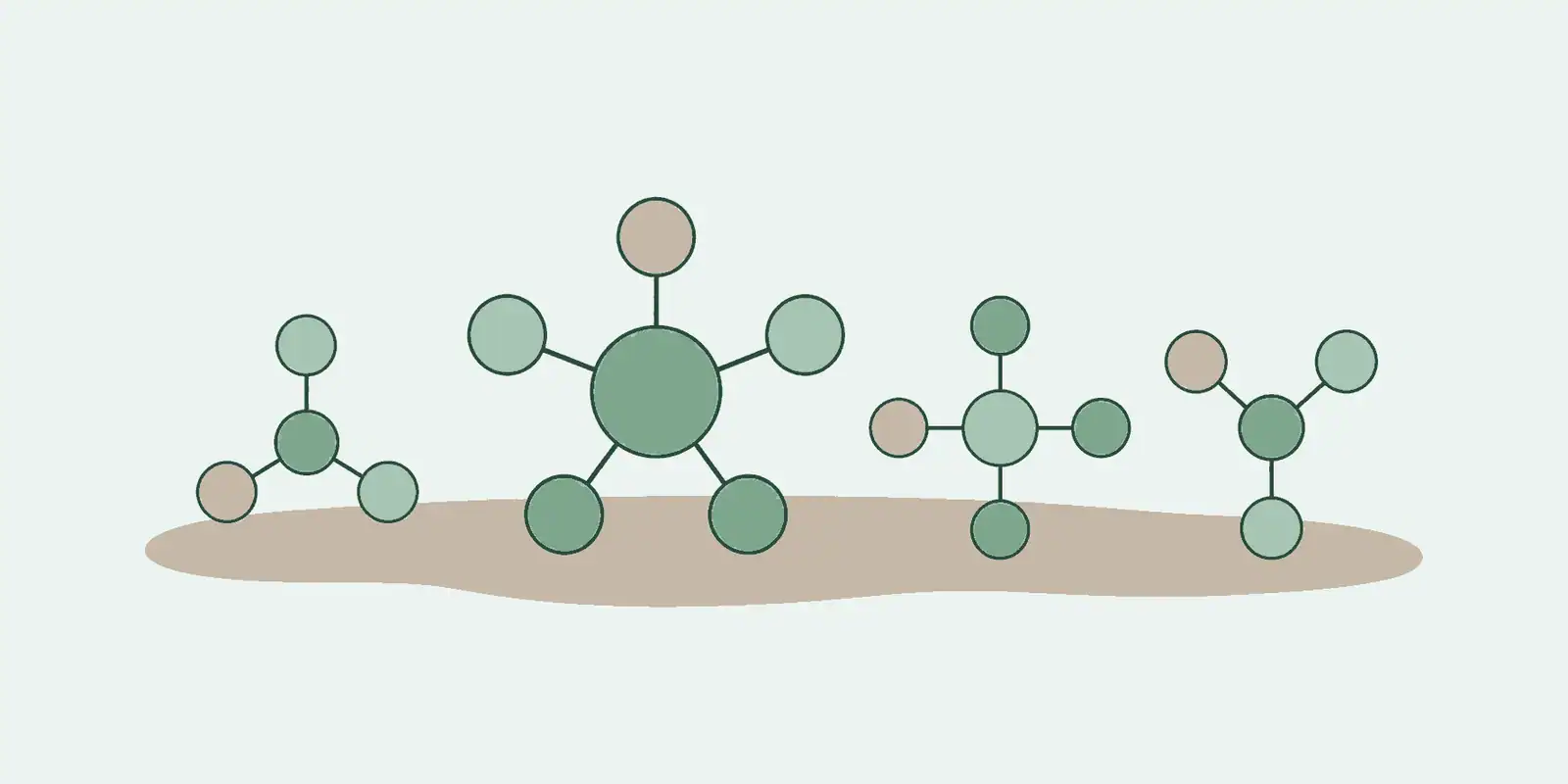
Over the years more than a hundred compounds have been discovered that interact with the ECS. The best known are tetrahydrocannabinol (THC) and cannabidiol (CBD). Cannabigerol (CBG), cannabinol (CBN) and cannabichromene (CBC) are also popular as supplements. Below you can read in brief what these compounds are.
Tetrahydrocannabinol (THC)
The best known, and at the same time most notorious, cannabinoid is THC, in full delta-9-tetrahydrocannabinol. This is the compound that causes the mind-altering effect of smoking a joint or eating a space cake. So it is the compound that gets you high. That is why, from a certain concentration (above 0.05%), THC is seen as a drug by the legislator.
At concentrations below 0.05% THC is not psychoactive, and that is why products with less than 0.05% THC are legal in the Netherlands. THC interacts directly with the ECS, because its structure resembles the body’s own compound anandamide and it attaches to the CB1 receptor.
Cannabidiol (CBD)
CBD is a very well-known cannabinoid and the main constituent of many products in our webshop, such as CBD oil, CBD capsules, CBD patches and CBD creams. Research suggests that CBD slows the breakdown of anandamide in the body. Unlike THC, CBD is not psychoactive and is therefore legal. CBD is a food supplement, not a medicine. There are currently no EU-approved health claims for CBD.
Cannabigerol (CBG)
CBG has been gaining popularity in recent years. At Dutch Balance you will find CBG as an oil and as pure CBG isolate. CBG’s interaction with the ECS resembles that of CBD. Research into CBG is still at an early stage.
Cannabinol (CBN)
CBN too has been attracting interest lately. Like CBD and CBG, CBN oil is not psychoactive and therefore legal. What is special about CBN is that it occurs mainly in older cannabis plants, as the end product of the conversion of THC. CBN interacts with the ECS as well.
Cannabichromene (CBC)
CBC is popular as the main constituent of CBC oil and occurs naturally in full and broad spectrum products. CBC too is not psychoactive and is legal, and interacts with the ECS. As with the other lesser-known cannabinoids: more research is needed.
Frequently asked questions about cannabinoids
What are cannabinoids?
Cannabinoids are chemical compounds that can bind to the cannabinoid receptors in the body. They were first discovered in the cannabis plant, hence the name. Of the roughly 300 compounds in cannabis, 80 to 100 are cannabinoids; terpenes and flavonoids are not among them.
What does cannabidiol do to your body?
We are not allowed to say. No health claims for cannabidiol (CBD) have been approved in the European Union. What is established: CBD interacts with the endocannabinoid system and is not psychoactive, so it does not get you high. What that interaction means for people is still being researched.
What are endocannabinoids?
Endocannabinoids are cannabinoids that your body makes itself, such as anandamide. Every mammal has them. Together with the cannabinoid receptors they form the endocannabinoid system (ECS), which is involved in a wide range of processes in the body.
What are synthetic cannabinoids?
These are cannabinoids made in a lab, often for scientific applications. So they do not come from a plant or from the body. The cannabinoids in CBD oil come from the hemp plant.