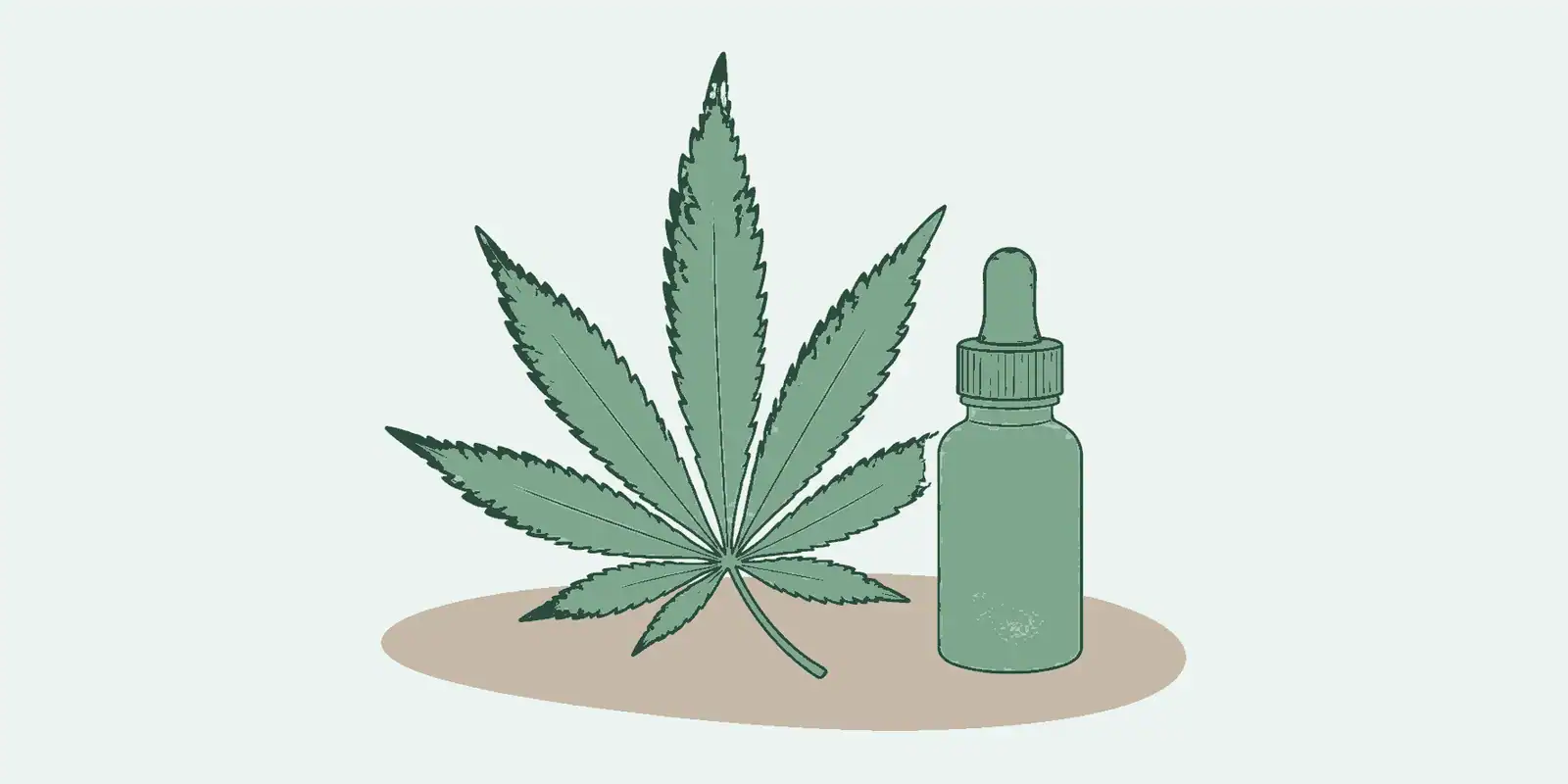
Cannabinol (CBN) is a lesser-known cannabinoid that has been getting more attention lately. CBD and THC are usually centre stage, but CBN deserves a place of its own. In this article you can read what CBN is, how it differs from CBD, which forms there are and how you use it.
What exactly is CBN?
CBN is a natural compound in cannabis that arises through the breakdown of THC. When THC is exposed to oxygen and light, it slowly turns into CBN. Older cannabis therefore often contains a higher CBN content. Fresh plants contain hardly any CBN; it is literally a compound that arises over time.
That origin makes CBN special within the family of cannabinoids. Where CBD and THC are both produced directly by the plant, CBN is a derivative. And important to know: like CBD, and unlike THC, CBN has no strong psychoactive action. At usual doses it does not get you high.
CBN and CBD: what is the difference?
The two are often mentioned in the same breath, but there are clear differences:
- Origin: CBD is produced directly by the hemp plant. CBN only arises when THC breaks down under the influence of oxygen, light and time.
- Amount in the plant: hemp naturally contains a lot of CBD and only a little CBN.
- Research: much more research has been done into CBD by now than into CBN. So anyone who wants to know more about CBD will find a firmer knowledge base there.
- Receptors: both compounds interact with the endocannabinoid system, but in a different way. More on that below.
Many users therefore do not see CBN as a replacement for CBD, but as an addition alongside it. That is why the two are often combined in one product.
How does CBN relate to the body?
Like other cannabinoids, CBN interacts with the endocannabinoid system (ECS). CBN has a weak affinity for the CB1 receptors in the brain and appears to act more strongly on the CB2 receptors. What that interaction does for people exactly is still being researched.
CBN and research
Research into CBN is still at an early stage. Many studies are small or carried out in the lab, often with CBN in combination with other cannabinoids such as CBD. That gives pointers, but no hard conclusions for humans yet.
There are currently no EU-approved health claims for CBN. It is a food supplement, not a medicine and not a replacement for medical care. Do you take medication, are you pregnant or breastfeeding? Then consult your doctor first.
In which forms do you find CBN?
CBN is available in various forms. The two most common:
- CBN oil: the best-known form, drops you take under the tongue. Our CBN oils come in strengths of 5%, 10% and 20% and are all full spectrum: besides CBN they contain the other compounds from the plant, including the basis for the entourage effect.
- CBN isolate: CBN crystals are CBN in pure form. Handy if you do not like the taste of oil: you take them neat or mix them into a drink or dish.
Which form you choose is mainly practical. Oil is easy to dose per drop, isolate gives you full control over what you take in.
Taking CBN oil: how to do it
- Use: you take CBN oil sublingually, under the tongue. Put the number of drops you want under your tongue, let it sit for 30 to 60 seconds and then swallow. This way the CBN is absorbed through the mucous membranes.
- Dose: start with a low dose to see how your body responds. We advise 2 to 3 drops per moment of intake. If you are only just starting, choose a lower strength (5%) rather than the highest straight away.
- Timing: many people take CBN two to three times a day, preferably with a meal for better absorption.
- Combinations: CBN is often combined with other cannabinoids such as CBD. Full spectrum oil already contains that combination by itself.
Does CBN have side effects?
Because research into CBN is still young, possible side effects have not been well mapped. That is no reason for panic, but it is a reason for common sense: start low, build up calmly and listen to your body. If you notice something that does not feel right, stop taking it. And as said above: if you take medication, consult your doctor or pharmacist beforehand. Some cannabinoids can influence how medicines work.
Frequently asked questions about CBN
Does CBN get you high?
No. CBN does arise from THC, but has no strong psychoactive action of its own. At the doses common in supplements it does not get you high.
Can you use CBN and CBD together?
Yes, you can. In fact, in full spectrum CBN oil both compounds occur naturally together. Many users deliberately choose that combination because of the entourage effect.
Why does old cannabis contain more CBN?
Because CBN is a breakdown product of THC. The longer the plant has been exposed to oxygen and light, the more THC has been converted into CBN. For supplements, incidentally, CBN is obtained under controlled conditions, not from “old stock”.
Trying CBN yourself?
CBN is seen by some users as an addition to CBD. Are you curious? Have a look at our range of CBN oils in 5%, 10% and 20%, or choose CBN crystals if you prefer pure isolate. Questions? Feel free to get in touch, we are happy to help.