Chaga is one of the most striking mushrooms from the northern herbal tradition. Because of its special composition, Chaga has been used for centuries in the folk traditions of northern cultures. In this blog you can read what chaga is exactly, where it comes from, what is in it and how you use it.
At Dutch Balance we offer Chaga capsules from the brand Pure Mushrooms.
What is the Chaga mushroom?
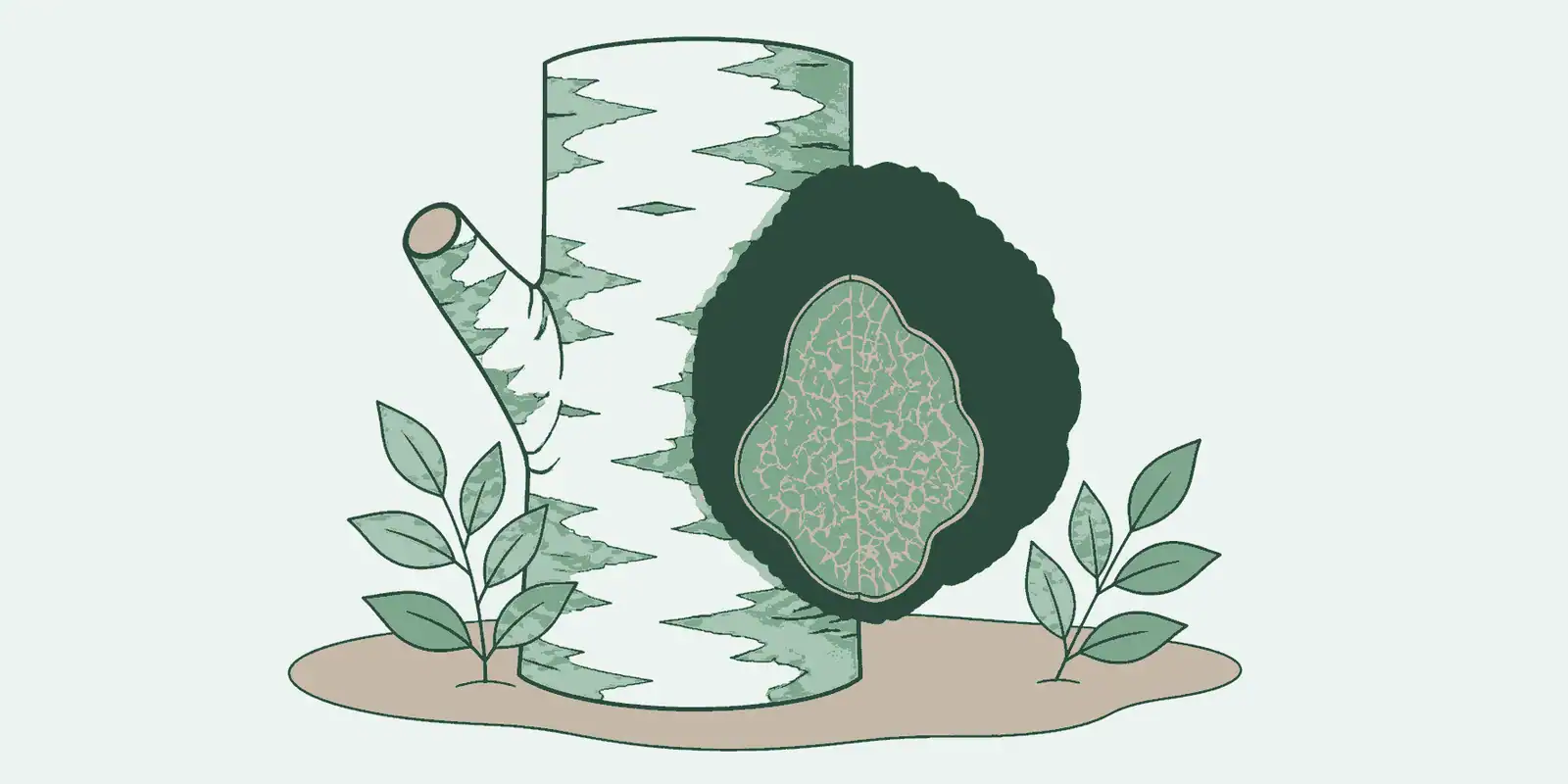
Chaga, also known as the birch conk (Latin name: Inonotus obliquus), is a special mushroom that grows mainly on the bark of birch trees in cold climates such as Scandinavia, Siberia, Canada and Alaska. Unlike most mushrooms it does not form a classic cap, but a hard, dark mass that looks like burnt wood.
For centuries Chaga has been used in the folk medicine of northern countries such as Russia and Finland, often as a tea. That long history is one of the reasons the mushroom is now attracting interest here as well.
What is in Chaga?
The composition of Chaga is what makes the mushroom special. It is low in calories and contains, among other things:
- Polysaccharides: complex carbohydrates you come across in more mushrooms.
- Betulinic acid: a compound that occurs naturally in birch bark and concentrates in Chaga.
- Phytosterols: plant compounds that structurally resemble cholesterol.
- Melanin: the pigment that gives Chaga its dark colour.
- SOD (superoxide dismutase): an enzyme that occurs naturally in the mushroom.
- Beta-glucans: a type of polysaccharide characteristic of mushrooms.
These compounds help determine the character of Chaga. What exactly they do in the body is still the subject of research.
Chaga and research
The compounds in Chaga are being looked at scientifically, but much of that research has been carried out in the lab or in animals. For humans there are no hard conclusions yet.
Online you will come across far more emphatic stories about Chaga, up to and including claims about serious illness. That certainty is not covered by what is known today, and the Dutch cancer information service has a page about it for a reason.
There are currently no EU-approved health claims for Chaga. It is not a medicine, but a food supplement that fits within a healthy lifestyle.
How you can use Chaga
There are various ways to use Chaga.
Chaga capsules
The simplest way. Our premium Chaga capsules from Pure Mushrooms contain 320 mg of concentrated extract per capsule. Stick to the dose on the packaging, generally two capsules one to three times a day. Handy for anyone with a busy life or travelling.
Powder, extract or capsules: what to look for
Search for Chaga and you will find powder, extract and capsules mixed together. The difference is concentration. Powder is the dried mushroom itself, ground. Extract is concentrated from that, and is often expressed as a ratio: at 10:1, ten kilos of raw material have been reduced to one kilo of extract.
A ratio on its own does not tell you everything. What also counts is which part of the mushroom was used and what the extract is standardised on. A high ratio on mycelium grown on grain says less than a lower ratio on the fruiting body.
So if you are comparing two jars, look at the raw material first and at the milligrams and the ratio second.
Chaga tea and in food
You can also use Chaga extract or powder in tea or add it to your food. For tea: prepare with water at 60 to 70 degrees and let it steep for at least 45 minutes. For food: stir a teaspoon into a smoothie, yoghurt or porridge.
Chaga side effects: is this mushroom suitable for everyone?
Chaga is generally well tolerated, but there are a few points to note:
- Chaga can interact with certain medicines, particularly blood thinners and diabetes medication.
- Anyone sensitive to fungi or mushrooms can have an allergic reaction.
- Because of its oxalate content, Chaga is not advised with kidney problems or a tendency to kidney stones.
Start with a low dose to see how your body responds. Do you take medication, are you pregnant or do you have a medical condition? Then consult your doctor first.
Frequently asked questions about chaga
What is chaga good for?
We are not allowed to say. No health claims have been approved for chaga in the European Union, and research has mainly been done in the lab or in animals. What is established: chaga has been used for centuries in the folk traditions of northern countries such as Russia and Finland, often as a tea. It is a food supplement, not a medicine.
What are chaga mushrooms?
Chaga is the common name for Inonotus obliquus, a fungus that grows on the bark of birch trees in cold regions such as Scandinavia, Siberia, Canada and Alaska. Unlike most mushrooms it does not form a cap, but a hard, dark mass that looks like burnt wood.
How do I make chaga tea?
Use chaga extract or powder with water of 60 to 70 degrees and let it steep for at least 45 minutes. You can also stir a teaspoon into a smoothie, yoghurt or porridge.
Does chaga have side effects?
Chaga is generally well tolerated, but it can interact with certain medicines, particularly blood thinners and diabetes medication. Because of its oxalate content it is not recommended with kidney problems or a tendency to kidney stones, and people sensitive to mushrooms can have an allergic reaction. If you use medication, are pregnant or have a medical condition, talk to your doctor first.
Discover all our mushrooms
Besides Chaga we offer other Pure Mushrooms supplements, such as Reishi and Lion’s Mane. Also have a look at our full range of mushrooms, our CBD products and vitamins and minerals.
Buying Chaga? Have a look at the organic Chaga capsules.